

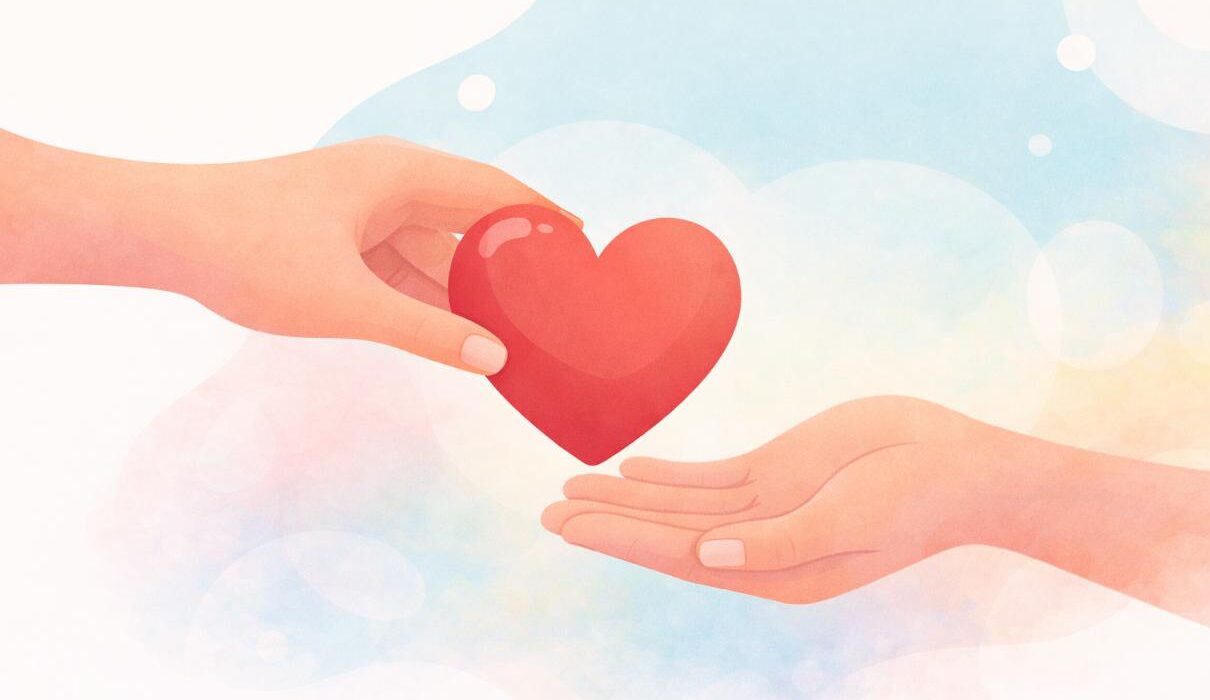
One decision. Many lifetimes.
Alin Sherin Abraham was just ten months old.
At that age, the world is still new—filled with first smiles, familiar voices, and small discoveries that mean everything. For her family, each day was a quiet celebration of life unfolding.
And then, in a moment, everything changed.
A tragic accident brought her journey to an end before it had truly begun. In the silence that followed, her parents faced what no family is ever prepared for—a loss too deep for words.
And yet, in the midst of unimaginable grief, they made a decision that would outlive their loss.
They chose to donate her organs.
In doing so, they allowed their child’s life to continue—not in memory alone, but in many others. Her liver, kidneys, heart valve, and eyes were were carefully retrieved, respectfully allocated, and swiftly transported to those who were waiting—some for months, some for years, and some with only days left to live.
A life that lasted ten months became many lifetimes.
It is difficult to speak about organ donation without returning to stories like this. Because before it becomes a system, a statistic, or a policy, it begins with a family. A loss. And a choice.
And the possibility that even in loss, life can continue, through the miracle of modern medicine.
A Nation Advancing, Yet Thousands Still Waiting
Across India, organ transplantation has grown steadily over the past decade. From fewer than 5,000 transplants a year to over 18,000 today, the progress is undeniable.
Hospitals are better equipped. Surgical expertise has advanced. Systems for allocation and coordination have matured and become more responsive.
And yet, a huge gap remains.
For every life saved, many more continue to wait.
Patients with end-stage organ failure hold on to hope—sometimes for years—waiting for a compatible donor. For too many, that hope fades before help arrives.
Because the real challenge today is no longer about medical capability alone.
It is about awareness, about consent and about those important conversations.
Many potential donors never become actual donors—not because the intent is absent, but because the moment arrives without preparation. In the absence of clarity, hesitation takes over.
And in that hesitation, lives are lost.
There are, however, signs of transformation in some states.
In Tamil Nadu, one of the India’s leading states in organ donation, 33 deceased donors were recorded in January 2026 alone— a powerful reminder that change is possible when systems, awareness and compassion come together.
Understanding The Gift
Organ donation is a selfless, humanitarian act in which a person voluntarily donates one or more organs – either while alive (living donation) or after death (deceased donation) with no expectation of financial or material return.
It can happen in two ways.
Living donation allows a person to donate certain organs—most commonly a kidney, or a portion of the liver—without compromising their own health. Advances in surgical care have made this a safe and viable option for many.
Deceased donation, however, holds the greatest potential. A single donation—and a family’s ‘yes’—can save many lives.
When a person is declared brain dead—an irreversible loss of all brain function—organs can be maintained for a limited time. During this window, multiple organs can be retrieved and transplanted.
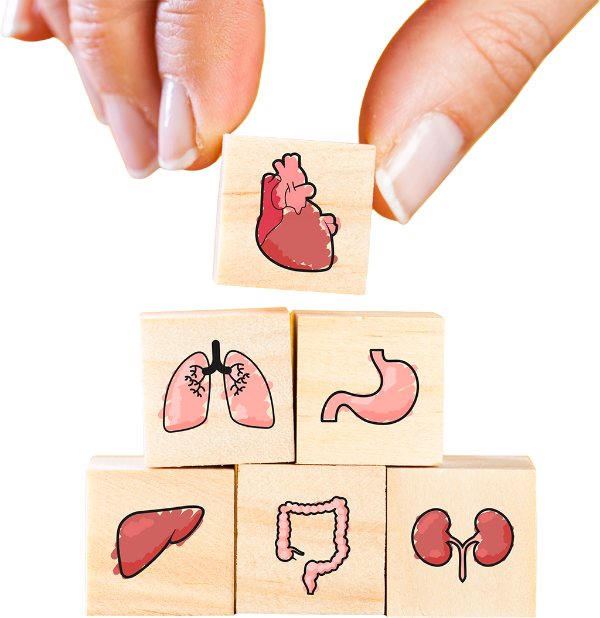
A single deceased donor can help save up to eight lives—and enhance up to 50 more through tissue donation. The most common organs and tissues donated include:
- Heart
- Lungs
- Liver
- Kidneys
- Pancreas
- Intestines
- Corneas and tissues
A kidney transplant can free a patient from years of dialysis. A heart transplant can restore mobility and energy. A lung transplant can help a patient breathe independently again, while corneal transplantation can restore sight.
Organ donation does not simply extend life. It restores the ability to live a normal productive life.
In India, organ donation is governed by clear ethical and legal frameworks that ensure fairness, transparency, and informed consent. Organs are allocated based on medical need—not financial means—and strict regulations prohibit any form of commercial trade.
A System That Saves Time – and Lives
In the critical hours between organ retrieval and transplantation, every second counts. Over the years, India has developed a coordinated system that ensures organs reach recipients swiftly and in optimal condition.
Across cities, these efforts have led to measurable differences. In Bengaluru, for instance, doctors once used the Namma Metro to transport a donor liver across the city in just over an hour—combining a 32-station metro journey with a final ambulance transfer. The time saved made the transplant possible.
In another instance, a kidney was transported by air from Jaipur to Ahmedabad in record time, demonstrating how coordination across states can support life-saving procedures.
One of the most remarkable innovations in India is the “green corridor”—a specially created, traffic-free route that allows organs to be transported between hospitals in record time. When such corridors are created in cities, traffic is halted, signals are cleared, and entire routes are synchronized—all to ensure that an organ reaches its recipient within the narrow window where it can save a life.
Minutes matter – and when systems work together, minutes saved are lives saved.
At one end, a life is lost.
At the other, a patient waits.
And in between, a system works tirelessly to ensure that life continues.

The Green Corridor
A coordinated, traffic-free route created to transport organs quickly between hospitals—where every minute matters.

Managing Trustee MOHAN Foundation
Behind Every Gift Is a Movement
Organ donation is not just a medical process. It is a human decision. And behind that decision is often guidance, support, and trust.
This is where non-profit organisations like the MOHAN Foundation (Multi Organ Hope and Advocacy Network) play a transformative role. Established in 1997 in Chennai by Dr. Sunil Shroff, the Foundation has been at the forefront of India’s organ donation movement.
What began as a mission to create awareness has grown into a nationwide network working across hospitals, communities, and governments.
The Foundation:
- Trains ICU doctors and transplant coordinators
- Supports hospitals in building and strengthening organ donation programs
- Counsels and supports families in making informed decisions about organ donation
- Conducts public awareness campaigns across regions
- Facilitates organ donation pledges and maintains donor registries
- Facilitated inclusion of an organ donor consent clause on driving licenses, making it easier for individuals to pledge donation
Over the years, millions have been sensitised, and more than 2.5 million individuals have pledged to donate their organs.
But much of this work happens quietly—behind hospital doors, in family conversations, and in moments where compassion must overcome uncertainty.
It is this invisible effort that makes every transplant possible.
A significant part of this work lies in bridging the gap between intent and action—ensuring that willingness is not lost to hesitation
Because ultimately, the goal is simple:
To ensure that no willing donor is lost. And no life is lost waiting.
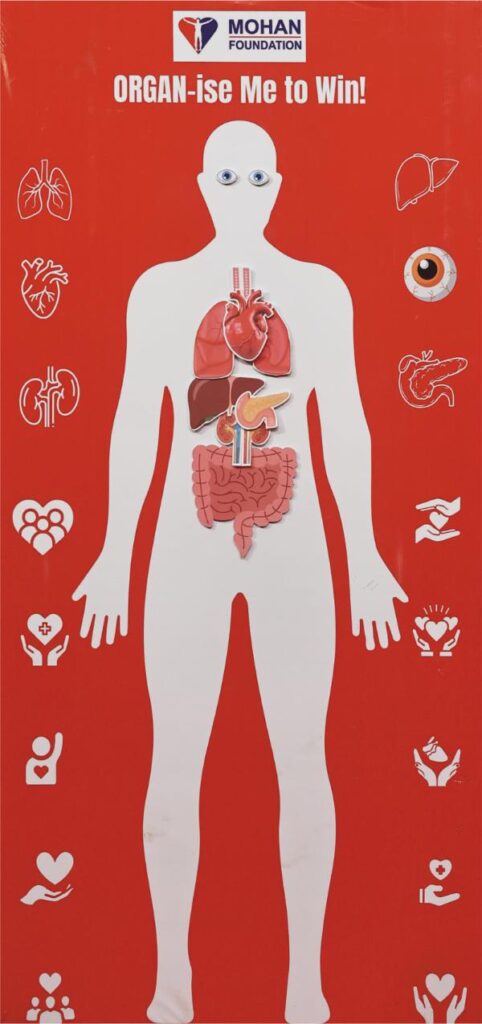
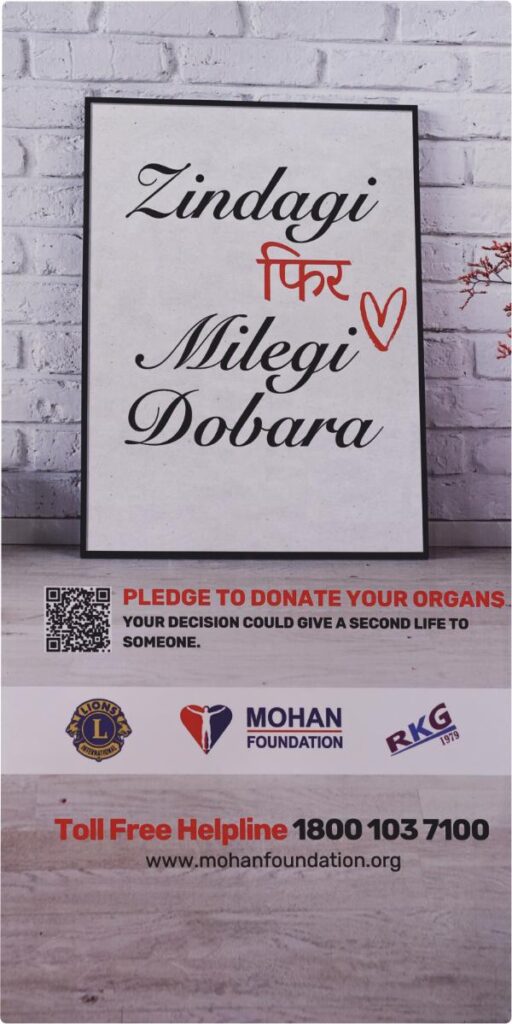
From Service to a Lifelong Personal Commitment
For Lions Clubs across districts, organ donation is emerging as an area where service takes on a different kind of role. Unlike traditional service initiatives, this work is not just about providing—it is about enabling.
Clubs are actively raising awareness in schools and colleges, collaborating with hospitals, and training members as ambassadors who can guide families through the donation process. In many cases, Lions members have also supported families in making decisions after loss—standing with them during some of their most difficult moments.
There is a growing recognition that impact in this space is not measured by numbers alone, but by preparedness—the ability to ensure that when the moment arises, the right information and support are in place.
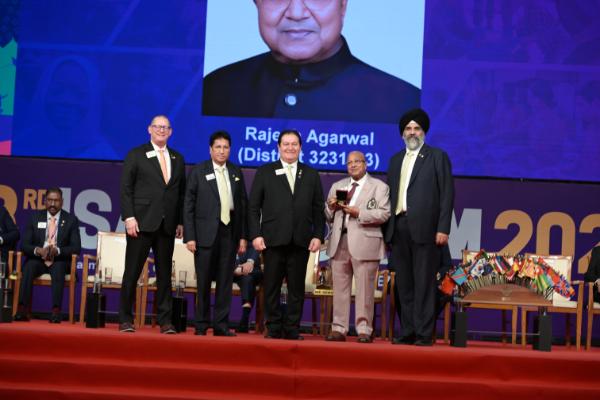
Within this larger movement, individuals like Lion Rajesh Kumar Agarwal of the Bombay Lokhandwala Township Lions Club, District 3231-A3, have demonstrated what personal commitment can achieve. Having joined as a Leo in 1975, Lion Rajesh has spent over three decades in humanitarian service, receiving several National and International Awards.
He believes organ donation represents one of the highest expressions of compassion. As Chairman of the RKG Ark Foundation, he has helped translate this belief into action through initiatives like OrganAware10M.org, encouraging individuals to pledge their organs and, importantly, to communicate that decision within their families.
Lion Rajesh Agarwal has committed to contribute over US$1 million to LCIF, supporting a wide range of initiatives.
Beyond Organ Donation
Body donation supports medical education and research. Donated bodies help train future doctors—refining surgical skills and deepening understanding. While organ donation saves lives in the present, body donation contributes to the care of many more in the years to come.
Lion Rajesh’s work, in collaborations between Lions Clubs, MOHAN Foundation, and RKG Ark Foundation, has strengthened organ donation awareness across regions—demonstrating how individual conviction can evolve into institutional impact.
In One Moment, Everything Changes
Ultimately, organ donation comes down to a single moment. All the systems, awareness, preparation, and advocacy lead to that one decision.
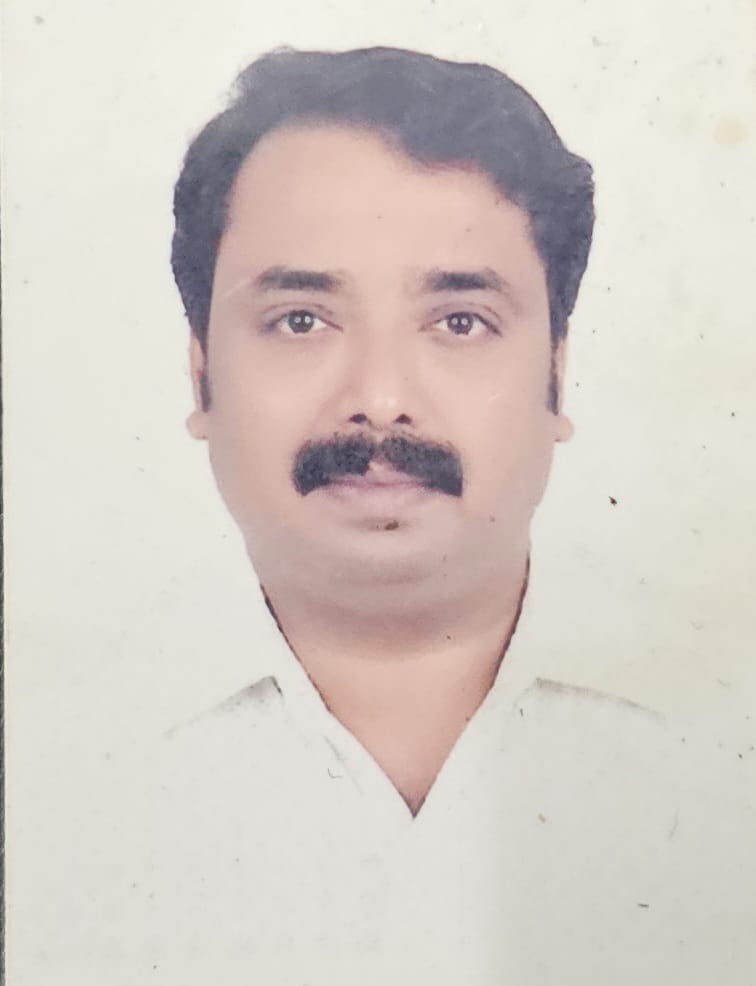
At KIMSHEALTH, Thiruvananthapuram, such a moment unfolded following the passing of 53-year-old Divakar S. Resh, Past President of Trivandrum King City Lions Club, District 318A.
After suffering a cerebral haemorrhage, he was declared brain stem dead.
In the midst of grief, his family chose to donate his organs. His kidneys, liver, and corneas were transplanted into patients in Thiruvananthapuram and Kozhikode, offering them renewed hope and life.
It is in such moments that organ donation moves from awareness to action.
And often, those decisions are shaped long before—through conversations held within families, through clarity of intent, and through understanding that this choice does not belong to an individual alone. It is this moment that lets a life that has been interrupted finds its way into another and then a heart continues to beat, eyes continue to see.
A Legacy That Lives On
- What ends for one person does not have to end entirely.
- It can move—quietly, powerfully—into someone else’s tomorrow.
- A child gets to grow.
- A parent returns home.
- A future once uncertain becomes possible again.
- All because someone chose to give.
A Call to Each of Us
- Organ donation is not about death.
- It is about what continues. It is about extending life itself.
- Give life a second chance – let your heart continue to beat…
- One organ donor can save up to eight lives—and impact many more.
- Talk to your family.
- Make your proud decision be known to all.
- Register as an organ donor.
- Because in the end, the greatest legacy we can leave behind is the life we give to others.
MOHAN Foundation — A Movement of Hope, Advocacy, and Life
Give Life. Leave a Legacy.
For more information on organ donation, log on to: www.mohanfoundation.org
Or call the toll free helpline: 1800 1037100
Recommended Watching
Aye Zindagi – A film on organ donation, based on a true story.