Lions India Education Promotion Council
C/o. Lions India Office
Vishwa Yuvak Kendra, Pandit Uma Shankar Dikshit Marg
Teen Murti Marg, Opp. Chanakyapuri Police Station
New Delhi – 110 021
From two chartered clubs in 1956 to 300,000 Lions across India — a story still being written
It is February 3, 1956. Bombay — the city we now know as Mumbai — is still finding its feet in a newly independent India. Energetic, ambitious, and alive with possibility, the city reflects the mood of a nation beginning to imagine its future.
On this particular evening, in a room somewhere in the city, a group of men and women have gathered for a purpose that is neither political nor commercial. They are there to formalize a commitment: to serve. The Bombay Host Lions Club is inaugurated, and Lionism takes root in India.
Eight days later, on February 11, 1956, the Delhi Lions Club receives its formal charter — the first club in India to hold that standing within Lions Clubs International.
Two cities, eight days apart, and a movement that would spend the next seven decades proving that the instinct to serve is not a sentiment but a practice. That it compounds. That it spreads — across districts and generations, with India eventually becoming home to the largest Lions membership in the world.
A Charter, and the People Behind It
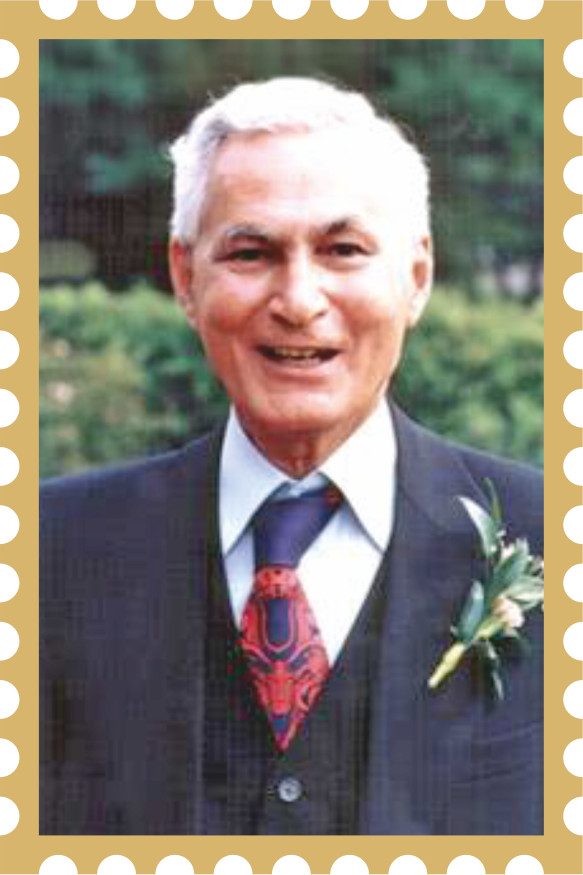
The story of Lionism in India begins, as many consequential stories do, with a conversation — and a man named Noshir Pundole. A man whose name would become inseparable from the founding of organized Lionism on the subcontinent, and who would later be remembered, with characteristic understatement, as the Father of Lionism in India. American Lion Robert Williams had recognized in India a country where voluntary service could find fertile ground. He found in Pundole a partner who understood not just the idea, but how to make it work here, in this country, among these people.
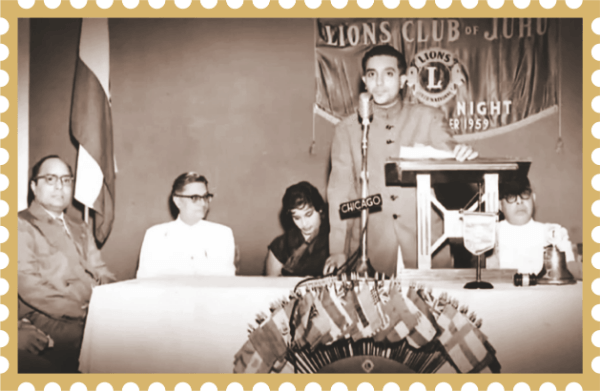
By the late 1950s, early photographs of Lions gatherings across Bombay show rooms that carry the unmistakable texture of the era — microphones marked ‘Chicago’ on the podium, small national flags lining the tables, the Lions bell to one side, men in Nehru jackets addressing audiences who had come, on weekday evenings, to talk about service. The rooms were modest. The intentions were not.
Commander Keiki B. Godrej established the Delhi club, and the two cities — Bombay and Delhi, each representing its own version of India’s ambition — helped shape the early growth of Lionism in the country. The inauguration of the first Lions Club in Bombay marked the beginning of Lionism in India; the chartering of the first club in Delhi gave it formal standing within Lions Clubs International — a commitment made in ink that communities across the country would spend decades keeping.
Noshir Pundole served as Charter President of the Bombay Host Lions Club and the first District Governor of the combined District 304, which at the time encompassed India, Burma, and Ceylon. He held that position from 1956 to 1959, building the administrative architecture that would allow Lionism to grow beyond its two founding cities. In July 1964, at the conclusion of the 47th Lions International Convention, he was elected the first International Director from India — a role he held through 1966. Three titles across a decade, each one a stepping stone that made the next possible.
By the end of 1957, 11 more clubs had been chartered. Another 13 followed by the close of 1958. The movement was still young, but its spread was already unmistakable — from Bombay and Delhi into cities like Poona, Kolhapur, and Ahmedabad.
What Seven Decades Built
The numbers today require a moment to absorb. India is home to approximately 10,000 Lions Clubs. Some 300,000 Lions across the country continue to give meaning to those two words — We Serve.
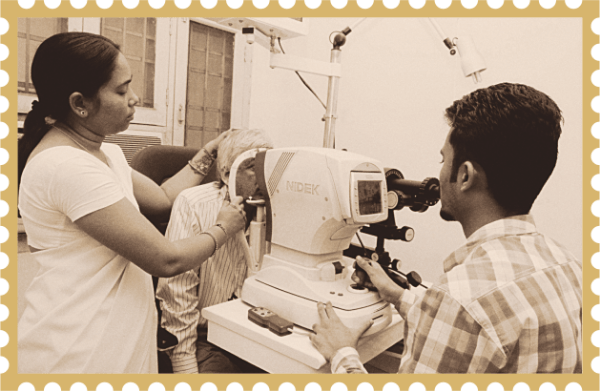
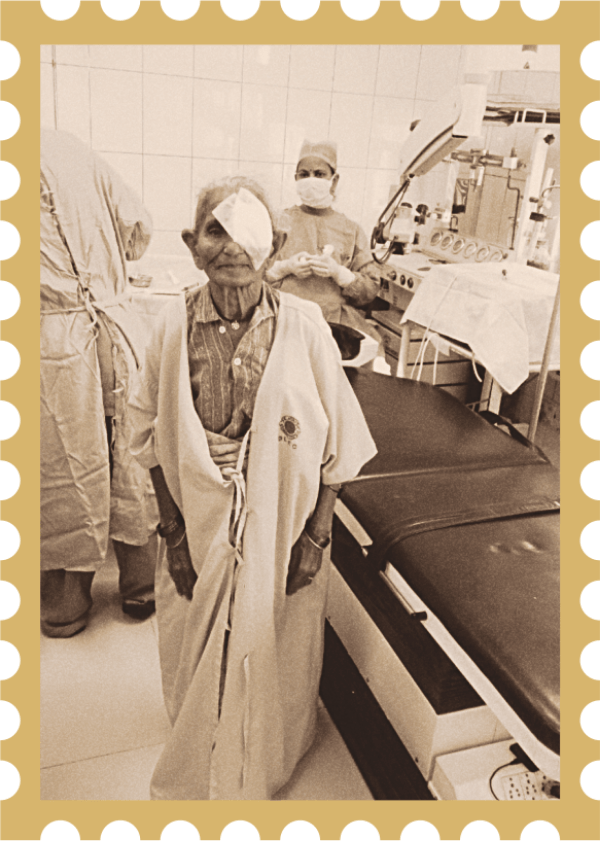
These numbers represent something more than organizational growth. They represent sight restored to patients who had resigned themselves to darkness. They represent children in remote districts who received vaccinations, or nutritious meals, or a pair of glasses that let them read a blackboard for the first time.
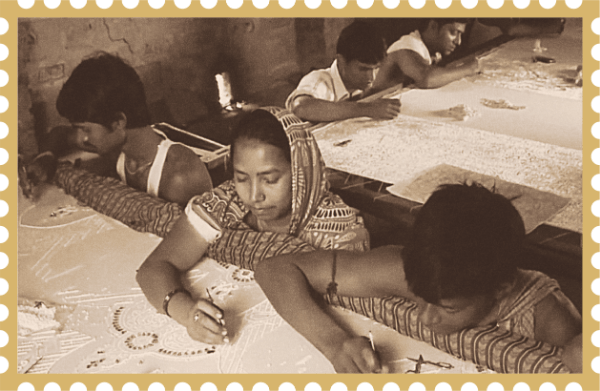
They represent blood donation drives, disaster relief operations, diabetes screening camps, and vocational training programs that have quietly, persistently altered the quality of life for millions of people who may never know the name of the club that served them.
Across the country, Lions schools, hospitals, blood banks, dialysis centres, and eye care institutions have become part of the social fabric of the communities they serve — permanent expressions of a movement sustained not only through events and campaigns, but through institutions created to serve generations.
Lionism in India has grown with the country — absorbing its diversity, reflecting its complexity, and addressing its needs with the particular energy of a voluntary movement sustained by the time, commitment, and conviction of its members.
Mumbai, March 3, 2026: Marking the Moment
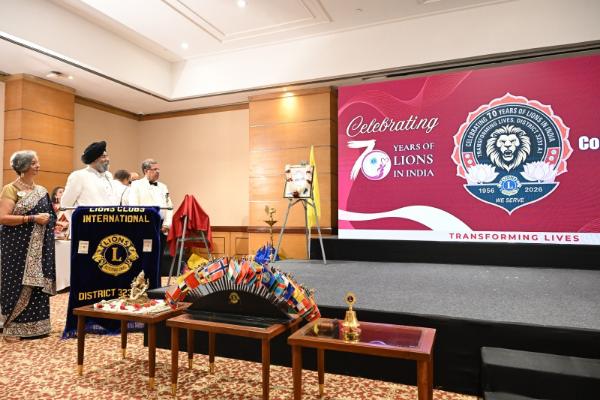
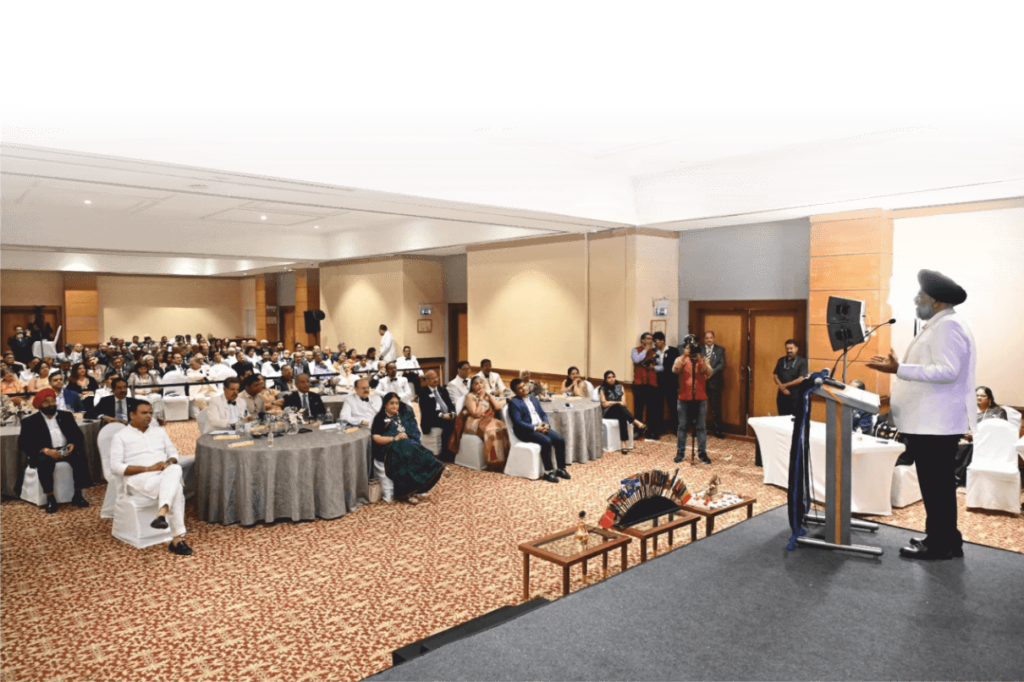
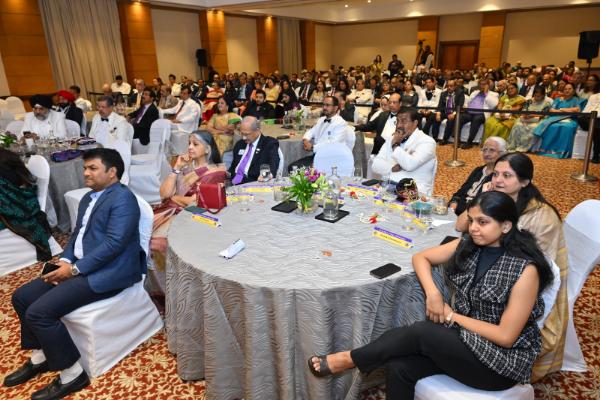
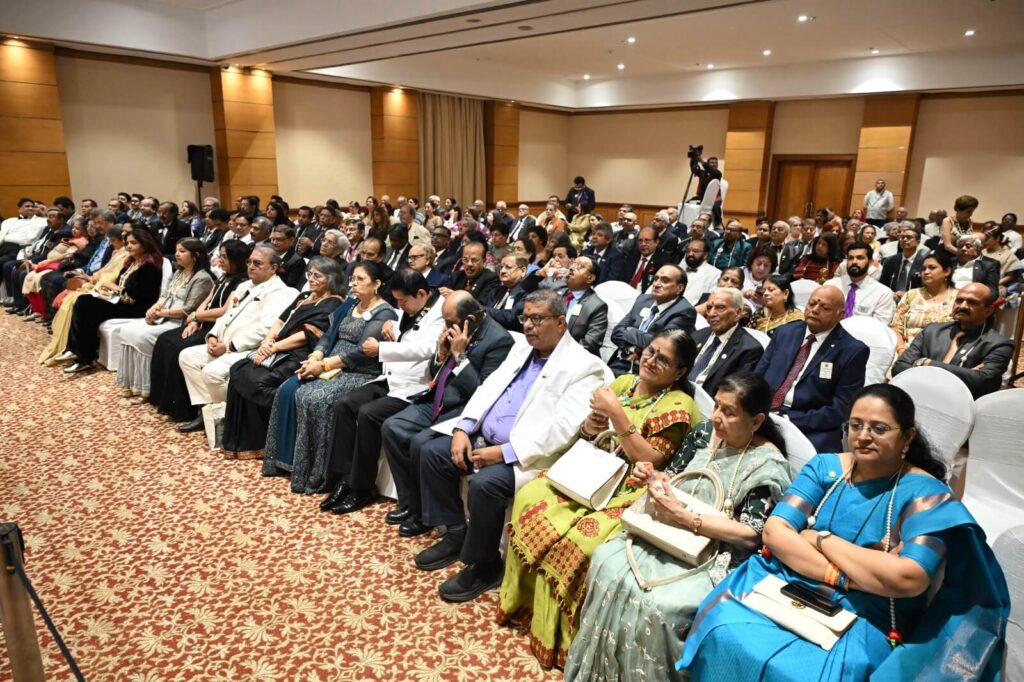
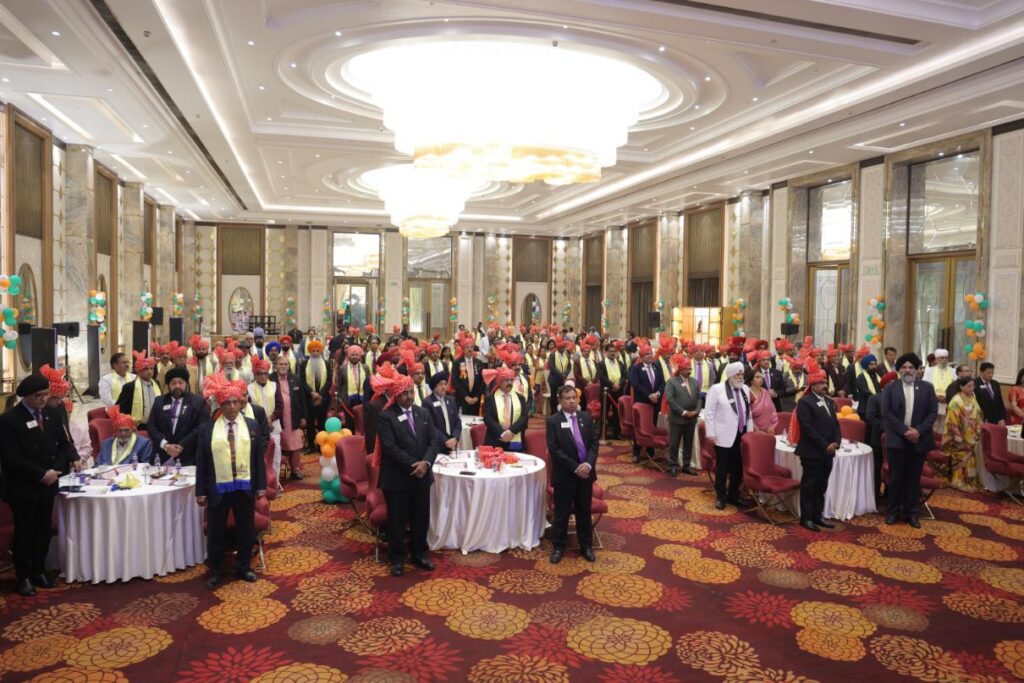
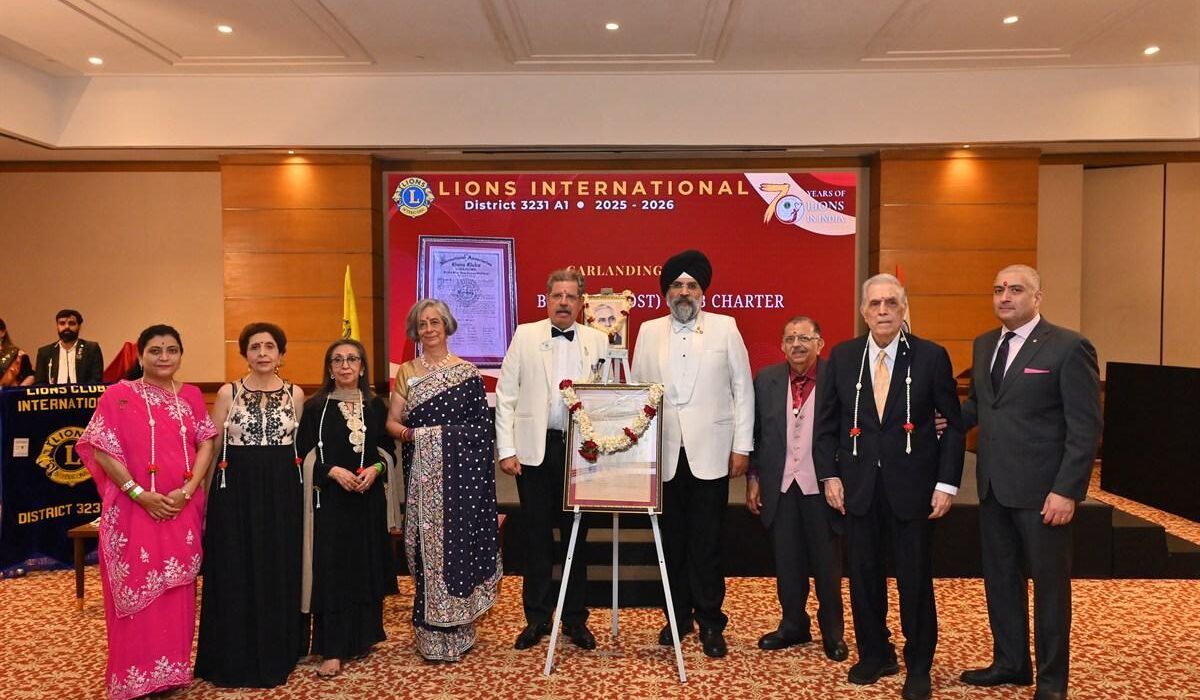
The 70th anniversary celebrations in Mumbai carried the weight of history and the warmth of a reunion simultaneously. The venue — Hotel Taj President, Mumbai — filled with Lions whose combined years of service stretched back across multiple decades. The event was conceived and curated by District Governor Feroze Katrak of District 3231-A1, who understood that a milestone of this scale deserved more than a dinner and a few speeches.
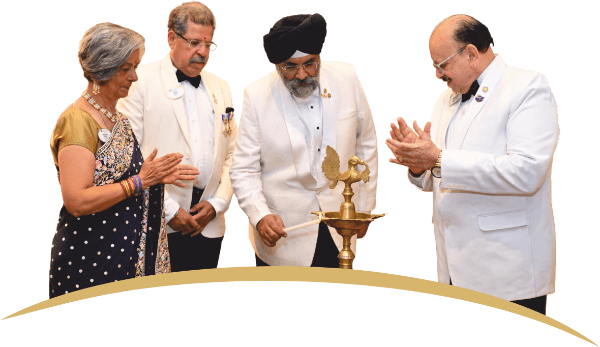
The evening opened with the traditional lighting of the lamp — a gesture that in this context carried particular resonance, given how much of Lions’ work in India has been about restoring light to those who had lost it, literally and otherwise. Somewhere backstage, young Leo members were making final adjustments to costumes and cues, steadying themselves before the hall fell quiet.
What followed was a Leo invocation dance, and a musical score composed and presented by Leos, set against an audiovisual that moved through decades of Lions’ humanitarian work — cataract camps and blood donation drives, flood relief and scholarship ceremonies, each image drawing a sound from the audience that was somewhere between recognition and gratitude. The choice to give the Leos that platform was deliberate, and the room noticed.
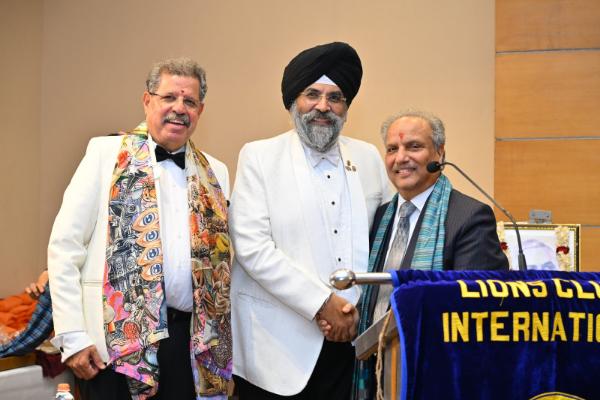
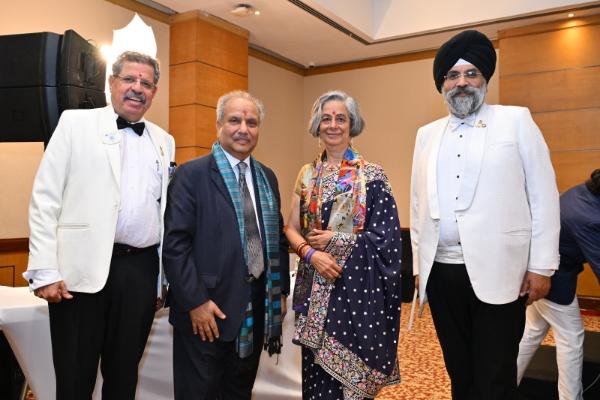
International President A.P. Singh joined Lion leaders from across the country in celebrating the milestone. Past International President Dr. Naresh Aggarwal was present, as were International Directors from across India and Bangladesh, members of the Multiple Council of District 3231, and dignitaries from sister Districts 3231-A2, A3, and A4.
In his welcome address, District Governor Feroze Katrak reflected on both the milestone being celebrated and the work still underway. During this Lions year alone, District 3231-A1 has undertaken service projects worth ₹25 crores — a measure of how deeply it remains engaged across its communities. The Lions Clubs International Foundation has sanctioned a grant of ₹1.3 crores for the Jerbai Wadia Children’s Hospital, specifically for paediatric cancer care — work whose impact will endure long beyond a single Lions year.
Maharashtra’s Minister of Housing, Education and Rural Development, Hon. Dr. Pankaj Bhoyar, and the Speaker of the Maharashtra Legislative Assembly, Hon. Rahul Narvekar, both addressed the gathering — their presence a mark of the relationship Lions has built with government over 70 years, and their words an endorsement of the work Lions continues to do in the state’s most remote corners.
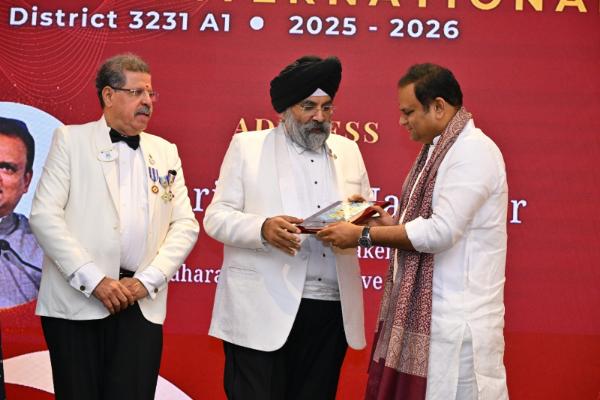
International President A.P. Singh personally presented the International President’s Medal to District Governor Feroze Katrak — the first recipient of that recognition for the year. Then came a moment the room had been quietly anticipating: Lions with more than 50 years of continuous membership were called forward to receive Certificates of Merit. One by one they rose — some moving slowly, some with the straight-backed ease of men and women who have been standing up for things their entire lives — and the applause that followed was warm and sustained, carrying the room’s respect for decades of service.
The commemorative pin marking 70 years of Lionism in India was released to an audiovisual that drew the room in — a small object, passed from hand to hand through the evening, carrying more history than its size suggested.
First Lady Shiraz Katrak, acknowledged by the evening’s speakers as a steadying and generous presence throughout her husband’s tenure, shared in the recognition that the occasion deserved.
In his address, International President A.P. Singh spoke about the responsibility that comes with growth — particularly in a country where the need for service remains immense. He spoke of a future in which every underprivileged child in India has access to education, and of an organization that must continue to innovate and evolve with the times rather than relying solely on its past achievements.
Two new clubs, the Mumbai Bollywood Lions Club and the Mumbai Kutch Lions Club, were formally chartered that evening, joining seven clubs already chartered during the year. Even on a night of retrospection, the organization was moving forward.
Delhi, March 8, 2026: Where the Charter Began
If Mumbai’s celebration felt rooted in memory, Delhi’s carried the energy of a movement spread across the country. It was here, 70 years ago, under the leadership of President Sardar Sant Singh, that the Delhi Lions Club was chartered.
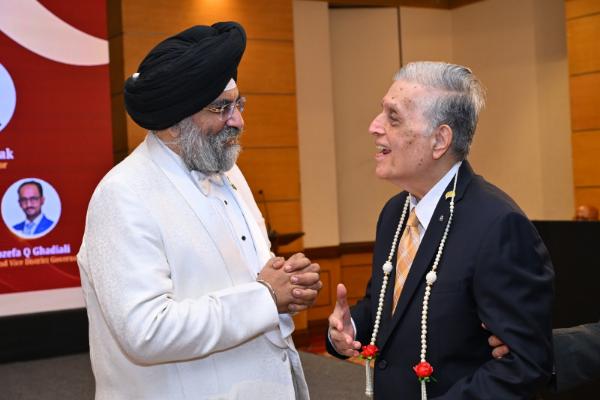
International President A.P. Singh joined Lions from across India for the 70th anniversary celebrations in Delhi. International Directors Raj Kumar Aggarwal, Subhash Babu Parvathaneni, and Ramesh Prajapati were present, alongside Past International Directors Sanjay Khaitan, V.K. Ladia, Dr. Nawal J. Malu, J.P. Singh, V.K. Luthra, Vijay Kumar Raju, Aruna Abhey Oswal, G.S. Hora, N.S. Sankar, Raju V. Manwani, Vinod Khanna, Pravin Chhajed, Jitendra Chauhan — together representing decades of service, leadership, and institutional memory.
Organized under the chairmanship of PDG Tejpal Singh Khillan and presided over by District Governor Onkar Singh, the event also brought together District Governors, Vice District Governors, and Past District Governors from across Multiple District 321 and the rest of the country.
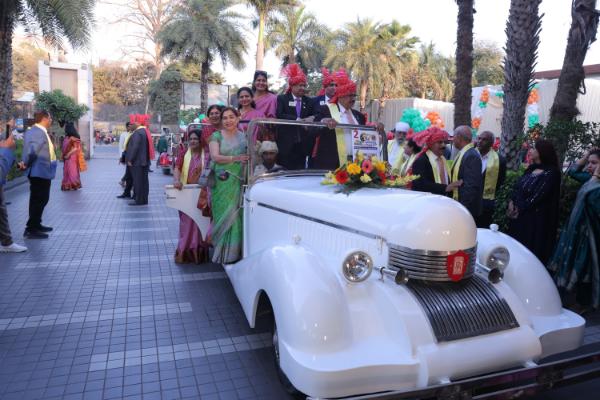
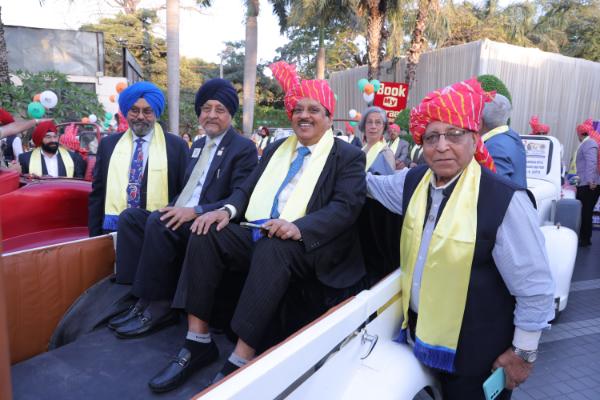
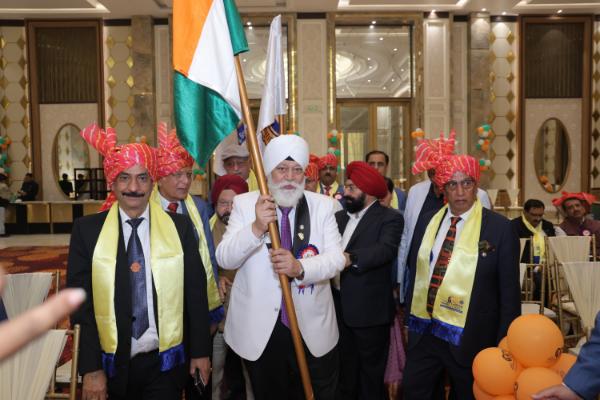
The celebrations opened with a vintage car procession — open-topped, flower-garlanded, carrying Lions sporting traditional turbans while tricolor balloons lifted above the crowd. It was festive in a way that was entirely intentional: a deliberate echo of 1956, when Lionism first took root in India.
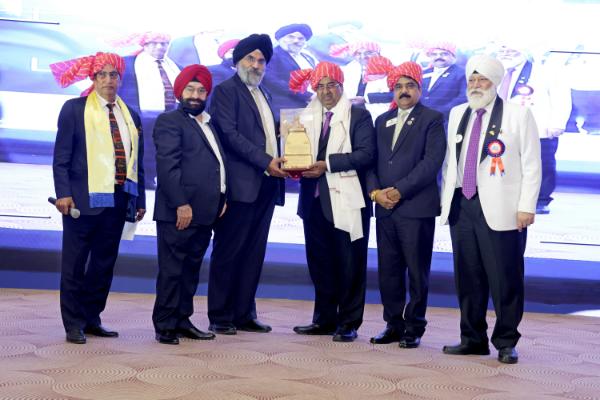
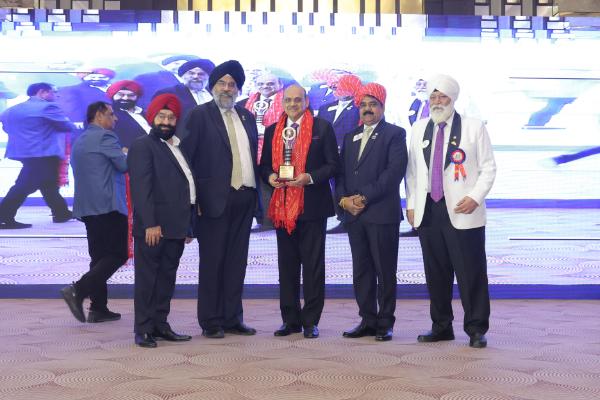
The Sant Singh Memorial Award, instituted by PDG Tejpal Singh Khillan and presented annually for two decades in honour of Delhi’s Charter President, was given this year to PID Vijay Kumar Raju — a recognition of leadership that connects the founding generation to the present one. As PID Raju walked to the stage to receive the award, the photographs of past recipients lined a screen behind him, faces from across the decades looking back at the room.
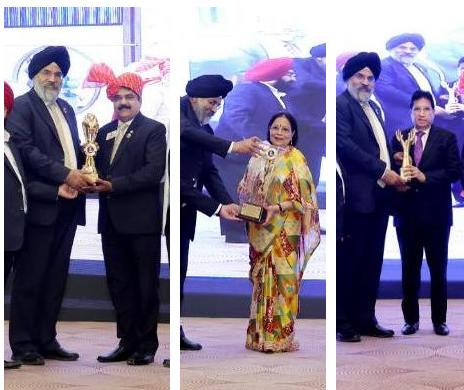
PID Pravin Chhajed received the Lions Enrichment Award for his inspiring leadership. PID Aruna Oswal and Lion Babita Chauhan were honored with Women Empowerment Awards — recognizing the growing role women have played in shaping contemporary Lionism in India. The ‘Pride of MD 321’ Award was presented to PID Jitendra Chauhan in recognition of his enduring contribution to the multiple.
Writing about the celebrations afterward, International President A.P. Singh noted: “Around 300,000 Lions from India take pride in wearing the Lions lapel pin — that is their declaration to the world that they are responsible citizens, individuals whose care and concern does not begin and end with their biological families only. Seva is part and parcel of their culture and lifestyle.”
The observation explains much about Lionism in India. The lapel pin is not an ornament. It is a visible expression of commitment.
The Next Charter
Sharing his vision for the years ahead, International President A.P. Singh spoke of his dream of India emerging as a leader within the global community — a future he connected to the deeply rooted culture of service among ordinary Indians. While nostalgia was inevitable at both events, his remarks repeatedly returned to the future — and to the responsibility of preparing Lionism in India for the next 70 years.
“Leos are our future,” AP Singh told the Mumbai gathering, calling explicitly for reverse mentoring — a model in which young members bring their perspectives and skills into conversation with the experience of senior Lions, rather than simply waiting their turn. The idea is both practical and philosophical: an organization that has survived 70 years by adapting to India’s changing needs must also be willing to learn from the generation that will carry it forward.
India, with its 300,000 members and approximately 10,000 clubs, carries both the responsibility and the capacity to help shape the future of Lionism.
There are children today in rural Maharashtra, in the lanes of Delhi, in towns whose names do not appear on most maps, who have received care — a health screening, a meal, a scholarship, a surgery — from a Lions member they will never meet again. That is not a failure of connection. That is what sustained voluntary service looks like. It does not wait to be thanked. It moves on to the next person who needs it.
The charter was signed in 1956. The work it set in motion has never stopped.