

The veterinary team had been travelling for hours when they arrived. There was no time to rest. A Punganur cow needed an emergency caesarean section. They scrubbed up and got to work — and before the first day of the camp was over, a healthy calf had been delivered. It was a strong start to the week.
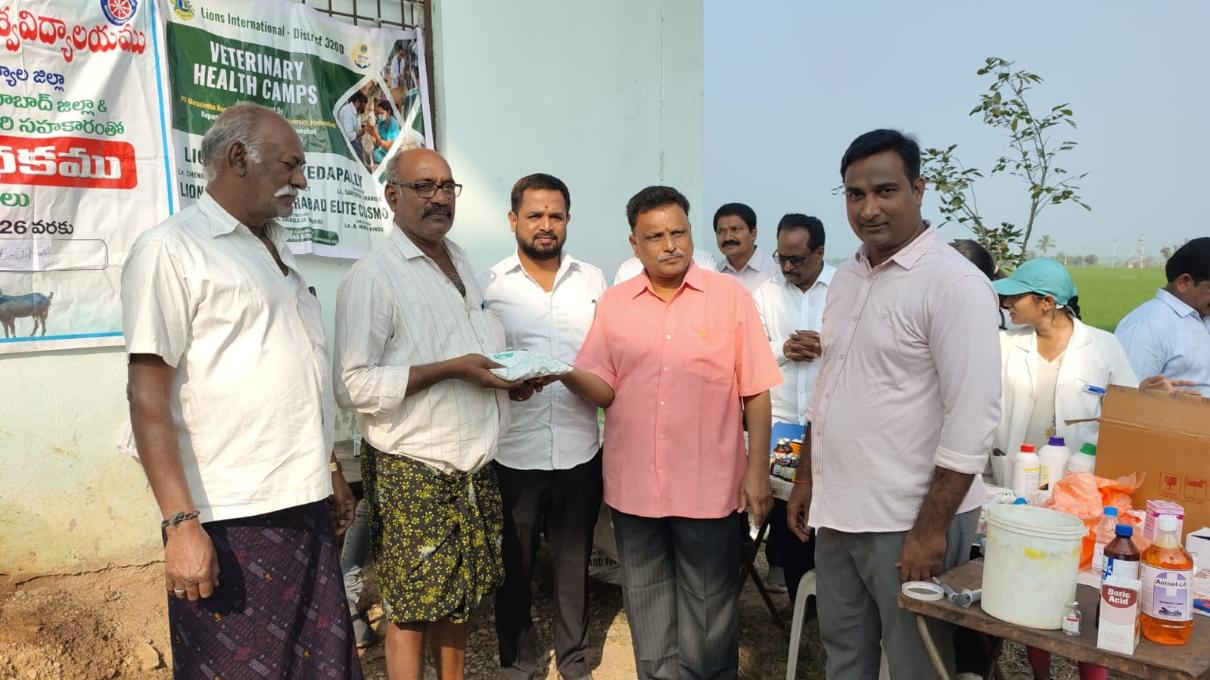
From February 1 to 7, 2026, District 320D organized a seven-day Animal Health Camp across 30 villages of Nizamabad District in Telangana. Rudrur served as the base camp. The initiative was conceptualized by PDG P. Basaveshwar Rao and District GMT Coordinator K. Suryanarayana, and drew wholehearted support from District Governor A. Amarnath Rao, who called for it to become a Twinning Program — uniting urban and rural clubs in shared purpose. Nearly 60 Lions Clubs responded, contributing funds, coordination, and manpower in equal measure. Bodhan Lions Club played an especially active role on the ground.
The camp was inaugurated at a Goshala in Bodhan Mandal, in the presence of Dr. M. Udaya Kumar, Dean of Faculties, PVNRT Veterinary University, along with senior veterinary officials. It was the first time such a ceremony had been held at a Goshala — a quiet but deliberate statement about where service truly belongs.
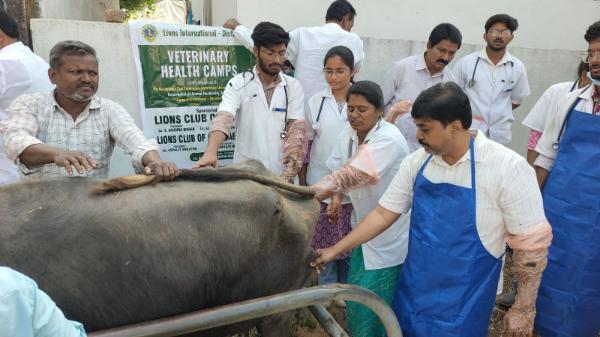
On the ground, a team of 73 final-year veterinary students and 29 faculty members worked alongside experts from the Department of Veterinary & Animal Husbandry, Nizamabad, and the District Livestock Development Agency — covering four to five villages each day. They treated cattle, buffalo, sheep, goats, poultry, and dogs, addressing digestive disorders, respiratory ailments, mastitis, reproductive health issues, and a range of surgical cases. Advanced diagnostic techniques were used to guide treatment.
But the camp went beyond treatment. Farmers were trained in fodder development, balanced feeding, mineral supplementation, and income diversification through Rajashree poultry and quail farming. Free mineral mixtures were distributed. Interactive farmer meetings strengthened confidence in scientific livestock management. For many in these villages, the camp was as much about livelihood as it was about animal health.
The camp’s reach extended beyond farms and fields. Awareness sessions in local primary and high schools covered nutrition, zoonotic diseases, animal welfare, and antimicrobial resistance — planting seeds of responsibility and empathy in the next generation.
The valedictory ceremony on February 7, 2026 was held at Bodhan, with Dr. M. Gnanaprakash, Vice-Chancellor, PVNRTVU, as Chief Guest, and Dr. A. Sarat Chandra, Registrar, as Guest of Honour. Certificates were presented to NSS volunteers in recognition of their dedication throughout the week.
In seven days, 7,034 animal cases were treated across 30 villages.
The numbers reflect the scale of the effort—and the coordination behind it.